Indonesia to launch US$1 billion orange bonds to empower women-led MSMEs
Indonesia to launch US$1 billion orange bonds to empower women-led MSMEs
Building on its success with green sukuk bonds, it introduces orange bonds to narrow the gender gap and support women entrepreneurs
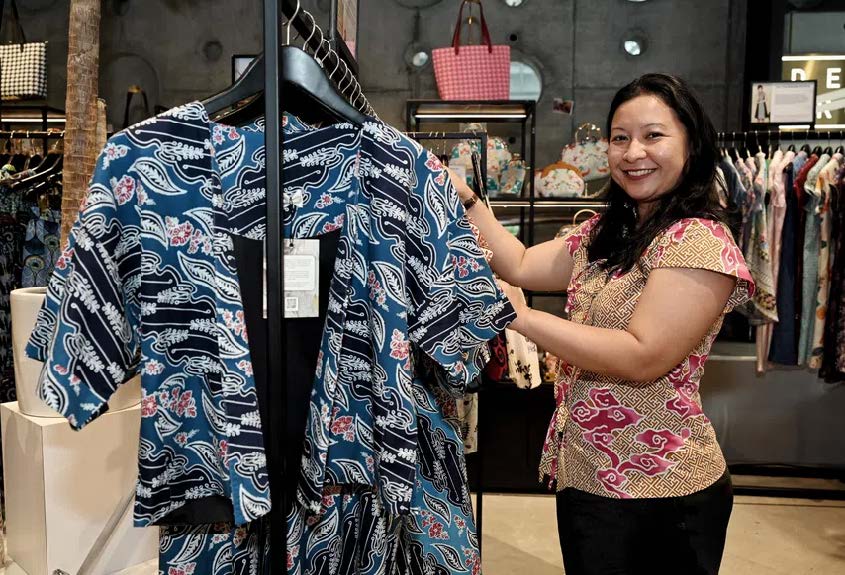
Studio Gypsied founder Nur Aqilah Zailan, 36, preserves and promotes the heritage of Nusantara women through her business, by working closely with artisans and tailoring partners in Indonesia. PHOTO: SHIQIN RAMADAN, BH
[JAKARTA] Indonesia is set to launch US$1 billion orange bonds to narrow the gender inequality gap in the country’s small business sector. Named after the colour of the United Nations Sustainable Development Goal 5, orange bonds are an asset class that aim to empower 100 million women, girls and gender minorities worldwide by unlocking US$10 billion of capital by 2030. The goal of the orange bonds, said Indonesia’s Ministry of National Development Planning (Bappenas), is to assist micro, small and medium-sized enterprises (MSMEs) that are helmed by women.
MSMEs account for 61 per cent of gross domestic product and provide 97 per cent of employment nationwide, yet they received only 19 per cent of bank loans. Women-led MSMEs (WSMEs) make up 64 per cent of Indonesian SMEs. A 2023 report by the World Bank’s International Finance Corporation said that Indonesia’s SME financing gap is estimated at US$234 billion. Closing that gap is imperative to Indonesia’s continued economic growth, and to its ambitions of becoming a developed nation by 2045.
Towards this end, Bappenas, the Directorate General of Government Debt Securities, the Ministry of Finance and the Impact Investment Exchange (IIX) jointly introduced the orange bonds at a roundtable meeting recently. During the session, a feasibility study supported by the Ford Foundation was also released, which highlighted some of the challenges as well as opportunities in introducing orange bonds in Indonesia. Having completed the first phase of the road map, the second phase will include integrating Indonesian enterprises into IIX’s Women Livelihood Bond 7, and mobilising US$1 billion in domestic capital for the adoption of orange bonds.
To raise the capital in orange bonds, IIX will partner financial institutions, state-owned enterprises, the private sector and the government. IIX chief operating officer Angela Ng said: “We see a lot of potential for orange bonds in Indonesia and are looking at continued innovation in sustainable financing to close the gender inequality gap.” A key challenge will be to ensure that the capital raised reach the right groups and individuals. IIX will work with local partners to identify the right WSMEs, ensuring that they receive the intended funds. The study found that 82.3 per cent of WSMEs reported inadequate working capital as a major obstacle to growth, and only 10 per cent of these enterprises are deemed to be investment ready. “With capacity building support, an additional 20 per cent of WSMEs could reach investment readiness, which can tackle poverty alleviation and lead economic growth, innovation and social development. This could inject an additional US$62 billion into the economy, bolstering GDP growth by 2.9 per cent,” the study noted. Another challenge will be to ensure that the women who receive financing from orange bonds have the capacity to absorb the funds and grow their business, especially in the more remote areas of the archipelago. In Lombok, for example, the average percentage of people living below the poverty line is nearly 15 per cent. Just four in 10 have received a proper education while 17 per cent of the women are illiterate, according to data from the Pro-Women organisation. Despite such conditions, many women on the island run micro-businesses in sectors such as agriculture and handicrafts.